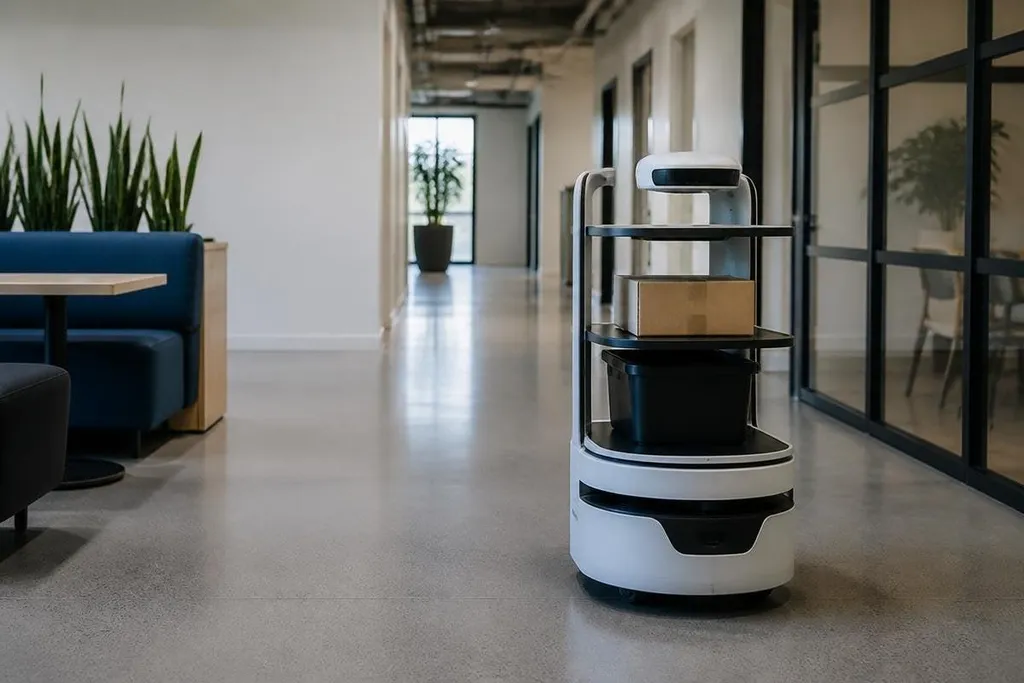
No evidence pack was supplied for this topic, so there’s no sound way to name the biggest service-robot advance. A useful watch list needs dated sources, named machines, measured results, and a clear account of what still fails.
Quick read
- A new-advance claim needs a machine, a task, and a result that someone else can check.
- Service robots should be judged by work completed, not by a short demonstration.
- Price, safety, support, and failure rates matter as much as movement or artificial intelligence.
Start with the task, not the label
“Service robot” covers machines that work around people rather than inside a fenced production cell. That can include systems for homes, hospitals, shops, hotels, offices, farms, and public spaces, but the label says little about what a machine can do.
A useful article would name the task first. Does the robot carry meals, clean floors, move stock, inspect equipment, guide visitors, or help with care? Each job needs a different test, so one broad ranking would hide more than it explains.
The next detail is the setting. A robot that moves well on a smooth indoor floor may struggle with door thresholds, crowded walkways, lifts, rain, poor lighting, or people changing direction without warning. Those limits decide where the machine can work.
What counts as a real advance
A robot earns that label when it changes a measurable part of the job. The proof might be a higher number of completed tasks, fewer human interventions, lower running cost, longer operation between charges, or safer work near people.
The source also needs to explain the test. A video can show that a robot finished one task. It does not show how many attempts failed, how much remote control was used, or how the system behaves after several hours.
For service robots, a report on Robot24.com can place a maker’s claim beside the model, test site, and date. That gives you a way to separate a repeatable trial from one polished run before you judge the robot’s value.
A strong source would include the model name, test date, site, task count, operating time, and price or lease cost. If a maker has published only a staged demonstration, the article should say so plainly.
The limits that decide the purchase
Service robots work around people, so safety comes before a polished demo. A report should identify emergency stops, speed limits, sensor coverage, remote supervision, and what happens after a sensor or network link fails.
Support can decide the purchase too. You’ll need to know who installs the robot, who repairs it, how spare parts arrive, and whether the software needs a paid subscription. A machine that sits unused during a repair does no useful work.
Cost needs the same care. The purchase price is only one line. Power, charging equipment, site changes, staff training, insurance, support, and downtime can change the total bill.
The missing evidence matters here. Without a named product and source, claims about savings, safety, or work speed would be guesses.
A watch list you can trust
Use this check before accepting a new claim about service robots:
- Name the machine: record the maker, model, software version, and release status.
- Define the task: write down the exact job, location, object weight, distance, and surface.
- Check the test: look for task count, success rate, human input, run time, and failed attempts.
- Price the full system: include hardware, site work, support, charging, and staff time.
- Read the safety details: check speed, stopping distance, sensors, remote control, and fault handling.
- Mark the open claim: state what the source has not tested, priced, or shown.
This list also gives you a clean way to compare new machines later. A service robot with a smaller demo but clear field results may deserve more attention than a polished video with no operating data.
I’d wait before calling any unnamed system the biggest advance in service robotics. The first useful list should begin with verified machines and measured work, then rank them by the jobs they can complete without constant help.